Baby Panda's Sweet Shop
- 4.2
- Rating
- 10.00M
- Installs
- Free
- Price
 Analysis by App-foxy
Baby Panda's Sweet Shop is the kind of game I would hand to a young child who wants to make things on a phone rather than simply watch a video. It is a free educational game from BabyBus built around preparing sweet treats and drinks, with a playful shop setting that gives each activity a clear purpose. I found its appeal less in challenge and more in the small feeling of control it gives children: choose an item, work through a simple process, and see a colorful result.
That simplicity is important. This is not a cooking simulation for older players, and it does not try to turn a popsicle or juice into a complicated recipe puzzle. Instead, it uses familiar food-making actions as a gentle way to encourage attention, sequencing, and experimentation. The store summary focuses on popsicles, candy, and juice, and those choices give the game an immediately understandable theme. A child does not need a long explanation before knowing what the shop is about.
After spending time with it, my overall impression is that the game succeeds when it is treated as a short, supervised play activity. It works particularly well for children who enjoy bright visual feedback and pretend-shop scenarios. It is less suitable for anyone looking for deep progression, demanding puzzles, or a large virtual world to explore. The mood is cheerful and inviting, but the experience depends on repetition rather than increasing difficulty.
You May Also Like

 Blood Strike: 2.5 Anniversary
Blood Strike’s Loadouts Turn Every Drop Into a Tactical Gamble
A close look at Blood Strike’s custom loadouts: how fast access to signature weapons reshapes its battle royale rhythm, rewards preparation, and narrows the gap between fights.

 Pandora - Music & Podcasts
Pandora’s Music Is Easy to Start, but Harder to Recover
Pandora’s strength is its low-effort path from a seed to a station. Its weak spot is how much confidence it asks you to place in connection, setup, and quiet recovery.

 8 Ball Pool
 Is Built on Rivalries, Rematches, and Routine
A close look at the rivalries, rematches, shared routines, and unanswered safety questions that turn a quick pool match into a persistent mobile community.

 Samsung Music
’s Quiet Strength Is Playing What You Already Own
Its reach comes less from spectacle than from dependable access to a personal library. That simplicity is both the app’s strongest retention engine and its ceiling.

 AccuWeather: Weather Radar
AccuWeather Review: A Quick, Clear Forecast for Everyday Decisions
For everyday plans, the best forecast is the one you can understand quickly. AccuWeather makes rain timing, radar, and local conditions easy to act on, with a few trade-offs.

 Hill Climb Racing
Why Hill Climb Racing Still Turns Crashes Into One More Run
A tiny car, a bumpy hill and one more upgrade: Hill Climb Racing keeps resurfacing because its simple chaos makes every near-miss feel personal.
More From Our News Desk



A bright shop built around making, choosing, and finishing
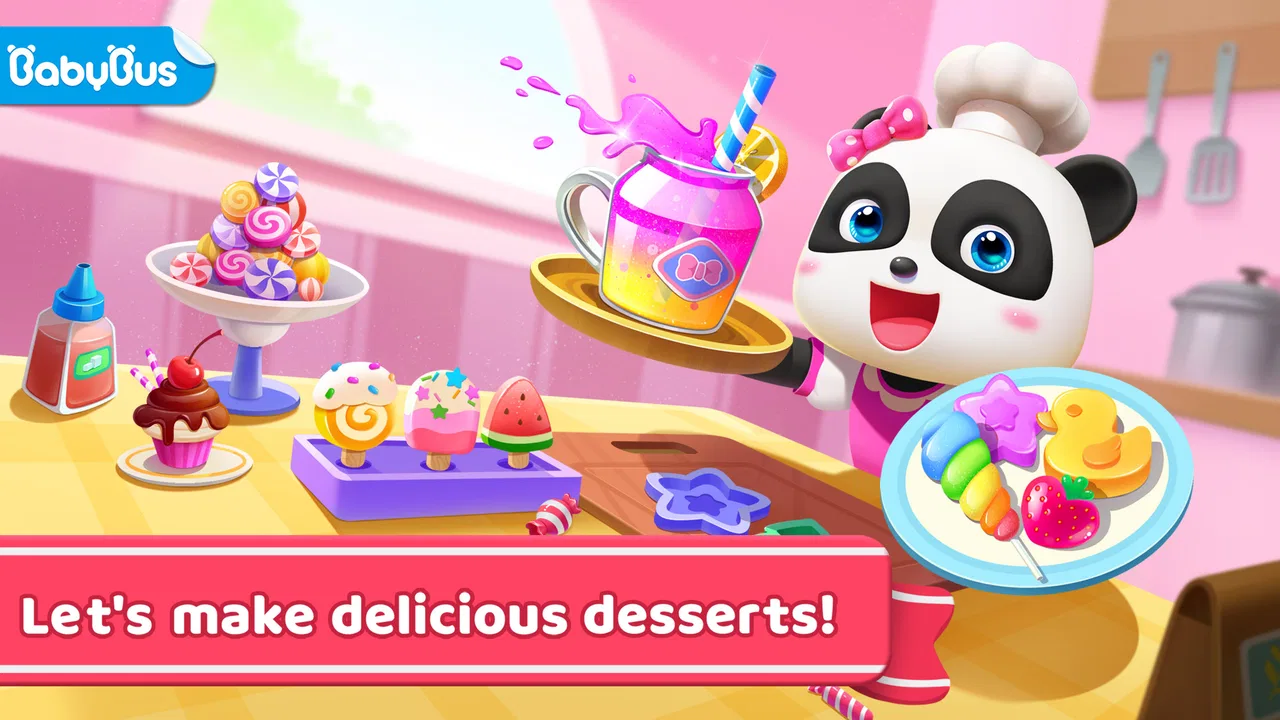
The first thing that stands out is the visual language. The shop environment is designed to make every object easy to recognize, with food items presented as the stars rather than hidden among complicated menus. Colors and shapes do much of the communication. A popsicle looks like a popsicle, a piece of candy looks like candy, and a drink belongs naturally in the same space. For a young player, that directness reduces the need to read instructions.
I also like the way the setting gives ordinary actions a little theatricality. Choosing ingredients or working on a treat feels like participating in a tiny performance behind the counter. The child is not merely tapping an icon to complete a task; the shop framing makes the sequence feel like preparation for a customer. That context helps the activities feel connected, even when each one is short.
The art direction is clearly aimed at comfort rather than realism. There is no pressure to make the result look technically correct, and the food has a friendly, toy-like presentation. That makes the game approachable for younger children, especially those who might be discouraged by realistic cooking apps with too many controls. The visual style also supports independent play because the important choices are usually easy to spot.
One useful detail is that the shop theme turns repetition into role-play. A child can return to a familiar activity without feeling that they are simply replaying a level. The same broad idea—making something sweet or refreshing—can remain enjoyable because it is framed as running a little counter. This is a modest design decision, but it is one reason the game feels more coherent than a collection of unrelated mini-games.
There is a trade-off, though. The same clarity that helps beginners can make the experience feel shallow to children who quickly understand every interaction. Parents should approach it as a calm, accessible activity, not as a game that will continually test new skills. If your child expects new rules, tougher recipes, or a substantial story, the shop may lose its novelty sooner than a more advanced cooking game.
How the setting supports young players
The shop is a useful middle ground between a drawing toy and a structured learning activity. It gives children a reason to make choices, but it does not punish them heavily for choosing differently. That matters in early play: experimentation remains part of the fun instead of becoming a source of frustration.
I found the setting especially suitable for short sessions after school or during a quiet moment at home. For example, a child can choose to make a treat while an adult prepares a real snack nearby. The virtual shop creates a parallel activity that is easy to understand and easy to stop. It does not require the player to remember a complex storyline before returning later.
That does not mean it replaces hands-on cooking. Real food preparation teaches safety, measurement, texture, and patience in ways a touch-screen game cannot. What this game can do is introduce the idea of following a sequence and making a finished product from separate steps. I would use it as a conversation starter—asking what the child would change in a drink or which treat they would sell—not as a complete lesson about food.
Sound, rhythm, and the feeling of progress
The audio design works best when it stays in the background and supports the visual actions. In a game built from small taps and gestures, sound effects help confirm that something happened. A response after a selection, preparation step, or finished item gives the child a sense of rhythm: choose, act, receive feedback, and move on.
That rhythm is more important here than musical complexity. The game’s mood comes from the repeated relationship between action and response. A child does something on screen and receives an immediate, friendly acknowledgment. This keeps the pace moving without demanding fast reflexes. The result feels active, but not frantic.
I would describe the pacing as deliberately gentle. There is room to look at the available choices and decide what to do next. That makes the game accessible to children who are still developing confidence with touch controls. It also means that older children may find the tempo too relaxed, particularly if they prefer timed play or competitive goals.
Parents should think about sound as part of the play environment. Because the activities are designed to be inviting and responsive, the game may be more pleasant at a moderate device volume than at maximum volume. In a shared room, a child can enjoy the visual feedback while an adult keeps the audio from becoming distracting. This is a small practical adjustment, but it helps preserve the calm atmosphere the design is aiming for.
The audio-visual rhythm also makes the game useful for demonstrating turn-taking. An adult can ask the child to explain what they are doing before the next action, or pause after a finished item and discuss the choices that led there. The game does not need to provide a formal quiz for these moments to become educational. Its clear pacing gives adults natural places to talk.
Simple mechanics with a clear purpose
The mechanics fit the intended audience because they connect actions to visible results. Instead of presenting an abstract score as the main reward, the game centers the completed food or drink. That is a strong choice for a pretend shop: the result is something the child can understand immediately, and the process leading to it feels meaningful.
A practical way to get more from the game is to encourage deliberate choices rather than rapid tapping. Ask the child to describe the order of actions, predict what the finished treat might look like, or compare two different choices. This turns a short activity into practice with sequencing and observation. The game remains light, but the adult’s questions can add depth without making the experience feel like homework.
Another useful approach is to let the child lead while the adult stays nearby. If the player gets stuck, offer a question instead of taking over: “What do you think belongs in the shop next?” or “What are you trying to make?” This preserves the child’s sense of ownership. Since the game is aimed at Everyone, its accessible structure makes this kind of shared play practical for families with younger children.
The controls are also better suited to touch-screen exploration than to precision. That is a strength for small hands, but it limits the game’s appeal for players who want mastery. There is little reason to practice a difficult technique repeatedly because the central pleasure comes from discovery and completion, not from improving a demanding score.
This is where the game differs from many alternatives in the educational category. A matching game may focus more directly on memory, a drawing app may offer more freedom, and a serious cooking simulator may provide more detailed procedures. Baby Panda's Sweet Shop occupies a softer middle space: it combines pretend play with guided steps. Choose it when you want a child to engage with a themed activity; choose another option when a specific academic skill or deeper creative tool is the priority.
Who will enjoy it, and who may outgrow it
I think the strongest audience is children who enjoy make-believe shops, colorful food, and short interactive routines. It can also suit a child who is hesitant about unfamiliar educational games because the theme is immediately friendly. The free entry point makes it easy for a family to try without committing to a paid title, although optional purchases are listed at $2.49 per item, so adults should remain aware of that possibility when handing over the device.
The game is available for devices running Android 6.0 or later, which covers a broad range of compatible phones and tablets. Its current version is 8.75.04.00. In practical terms, families should still use a device that gives the child enough screen space to see the shop clearly and tap comfortably. A very small display may make the visual choices less pleasant, even when the operating system is supported.
BabyBus has made a game that is easy to understand without turning the child into a passive observer. That is its main strength. The child has a role, a setting, and a series of actions that lead somewhere. The limitation is that the role remains narrow. Children who want exploration beyond the shop, a long narrative, or increasingly complex challenges should probably look toward a different type of game.
The age rating of Everyone is consistent with the gentle presentation and broad accessibility. Even so, I would not confuse an Everyone rating with a guarantee that every child will enjoy it equally. Some children prefer construction, puzzles, animals, or open-ended art. The right question is not whether the game is universally entertaining, but whether this particular shop fantasy matches the child’s interests.
Everyday use, purchases, and staying in control
In a realistic family situation, I could see this working during a ten-minute waiting period or as a transition between louder activities. A child might make a drink, finish a sweet, and then put the device away without needing to remember a complicated checkpoint. That short-session quality is valuable for parents who want something more interactive than a video but less demanding than a full game.
The free price also lowers the barrier to testing it. However, the presence of in-app purchases means I would set expectations before giving the phone to a child. Explain that some items may involve a purchase and make sure the device’s purchase controls are managed by the adult. This is not a criticism of the shop’s theme; it is simply sensible housekeeping for any child-focused free game with paid items.
The game has reached over ten million installs and holds an average rating of 4.0 from around seven thousand ratings, which suggests a substantial audience while also leaving room for mixed experiences. I read that combination as a reason to keep expectations balanced: many families clearly find the concept appealing, but popularity does not change the basic trade-off between easy access and limited depth.
How the mood holds together
What I appreciate most is the consistency between the setting, the art, the sound, and the mechanics. The shop looks cheerful, the actions are easy to read, the feedback keeps the pace moving, and the completed treats give each sequence a satisfying endpoint. Nothing feels dramatically out of place. The game is not trying to be a realistic kitchen, a competitive arcade title, and a classroom lesson at the same time.
That coherence is also why the limitations are easy to identify. The mood depends on friendliness and repetition, so players seeking surprise or tension may find it too predictable. There is no need to force the game into a more demanding role. Its value comes from offering a safe-feeling space where a child can choose, act, and finish something without a complicated penalty system getting in the way.
For me, Baby Panda's Sweet Shop is best understood as a small pretend-play experience with educational value around sequencing and decision-making. I would recommend it to a parent looking for a calm, colorful activity for a young child, especially when the child already likes food-themed play. I would skip it for an older player who wants substantial progression or for a family seeking a focused lesson in reading, mathematics, or real cooking technique.
My final verdict is positive but specific: this is a good choice when atmosphere and accessibility matter more than challenge. BabyBus has created a welcoming shop world whose visual language and gentle rhythm make the mechanics easy to enter. Used in short sessions, with an adult occasionally turning the actions into conversation, it can be more meaningful than the simple premise first suggests. Just keep its modest scope in mind, and treat the optional purchases as something the adult should manage.
FAQs for Baby Panda's Sweet Shop
01What is the main objective of Baby Panda's Sweet Shop?
Baby Panda's Sweet Shop is designed to be an engaging educational game for children, focusing on creativity and fun. The main objective is to allow kids to manage their own sweet shop, creating various desserts and candies while learning about different ingredients and recipes. It encourages imaginative play and problem-solving skills.
02Is Baby Panda's Sweet Shop safe for children?
Yes, Baby Panda's Sweet Shop is designed with child safety in mind. The app contains no inappropriate content and is free from third-party advertisements that could lead to external websites. Parents can feel confident knowing that the game promotes a safe and controlled environment for children to play and learn.
03Does Baby Panda's Sweet Shop require an internet connection?
No, Baby Panda's Sweet Shop can be enjoyed offline, making it ideal for travel or situations where internet access is limited. However, certain features or updates might require an internet connection. This offline capability ensures that kids can enjoy the app anytime and anywhere without disruption.
04Are there any in-app purchases in Baby Panda's Sweet Shop?
Yes, Baby Panda's Sweet Shop does offer in-app purchases. These purchases are typically for additional content or features that enhance gameplay. It's important for parents to manage these settings on their devices to prevent accidental purchases by children, ensuring a seamless and enjoyable gaming experience.
05What age group is Baby Panda's Sweet Shop suitable for?
Baby Panda's Sweet Shop is primarily designed for children aged 3 to 6 years. The game’s simple interface and educational content are tailored to engage young minds, helping them develop basic culinary skills and creativity. Parents should consider the developmental stage of their child to ensure the game is appropriate.
Pros
- Colorful and engaging graphics.
- Easy to navigate for young users.
- Educational elements included.
- Free to download with optional in-app purchases.
- Regular updates with new content.
Cons
- Contains ads that might distract.
- In-app purchases can add up.
- Requires internet for some features.
- Limited content without purchases.
- May not appeal to older children.

Baby Panda's Sweet Shop
Gallery